


Virginia | November 19, 2026
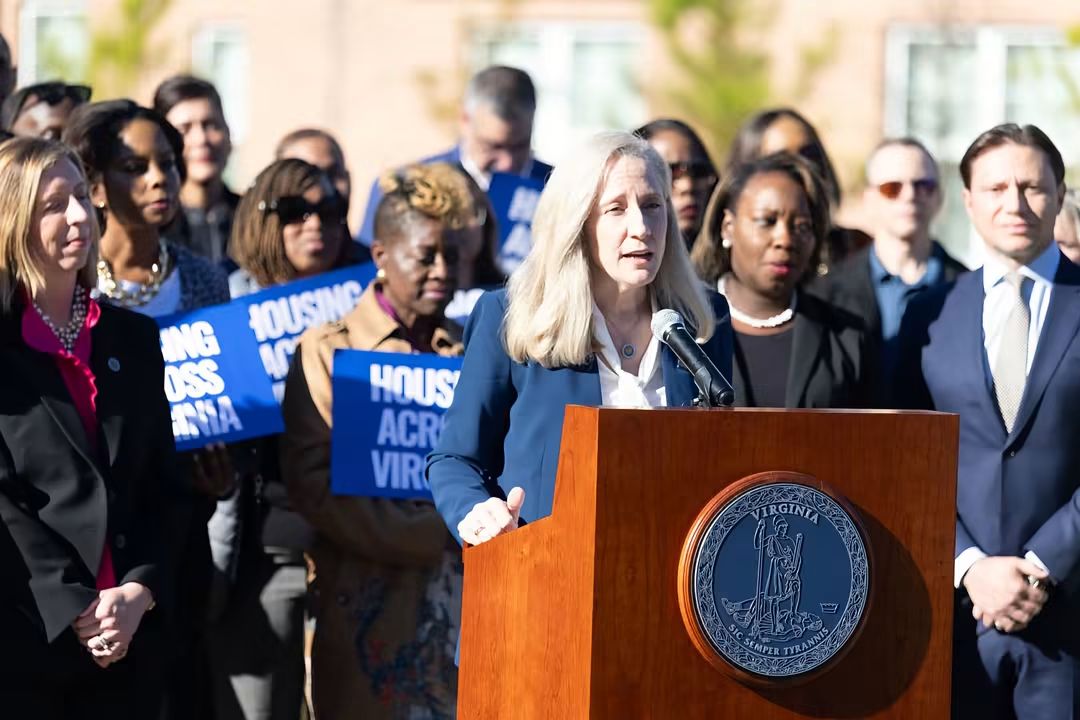
Virginia Gov. Abigail Spanberger has unveiled a sweeping housing agenda aimed at expanding affordable housing, preserving existing lower-cost homes, helping renters avoid housing instability and creating more opportunities for Virginians to become homeowners as housing costs continue to strain household budgets across the state.
The proposals, announced November 18 in Woodbridge as part of the administration’s Moving Virginia Forward agenda, are expected to be advanced during the 2027 General Assembly session. The package focuses on increasing housing supply, making better use of state-owned land, encouraging development near public transportation, preserving affordable rental properties and reducing barriers that can prevent families from accessing housing assistance.
The agenda also includes proposals to streamline home-repair assistance, expand manufactured housing opportunities, help families resolve inherited-property ownership issues, connect renters with financial and community resources, and examine zoning practices that may limit housing development.
Rather than relying on new construction alone, the administration is proposing a combination of development incentives, preservation programs, homeowner assistance and regulatory changes intended to address Virginia’s housing affordability challenges from several directions.
The announcement comes as housing costs continue to consume a growing share of household incomes, particularly among renters, while the state faces a shortage of affordable homes and concerns about existing properties losing their affordability protections.
For communities such as Henrico County and Hampton Roads, where housing affordability remains a significant concern, the proposals offer a broader policy framework that could complement existing local initiatives, although the governor has not announced specific funding allocations or construction targets for those regions under the new package.
Eight proposals target Virginia’s housing affordability challenges
The governor’s legislative agenda includes eight major proposals designed to expand housing choices, preserve affordability and improve access to assistance.
Encouraging housing near public transportation
One of the proposals would encourage transit-oriented development by creating incentives and potential state funding priorities for housing built near existing public transportation infrastructure.
The administration wants to establish transit-oriented development zones where housing construction could receive priority for certain state funding and incentives. The goal is to encourage communities to build homes in areas where residents have access to employment, public services and transportation.
Housing near bus routes, rail stations and other transit infrastructure could help reduce the cost of commuting, particularly for households that cannot afford a vehicle or face significant transportation expenses.
Supporters say connecting housing development with transportation planning could help residents save money while expanding access to jobs and other opportunities.
Sen. Saddam Azlan Salim, who supports the initiative, highlighted the importance of transit access for working families, pointing to his own family’s experience relying on public transportation when they could not afford a second vehicle.
The proposal would encourage localities and developers to consider housing and transportation together, rather than treating them as separate planning priorities.
Making surplus state land available for housing
The administration also wants to identify state-owned properties that could be used for affordable housing development.
The proposal would examine land that is no longer needed for its current government purpose and determine whether it could be made available for residential development.
Using land already owned by the state could help reduce development costs, particularly in locations where acquiring property has become expensive or where available land is limited.
The initiative could create additional opportunities for affordable housing developers, local governments and nonprofit organizations to pursue projects, although the administration has not yet identified a statewide inventory of sites, projected number of homes or construction timeline associated with the proposal.
Establishing a fund to preserve existing affordable housing
A proposed affordable housing preservation fund would help local governments and nonprofit organizations acquire apartment properties whose affordability restrictions are approaching expiration.
Many affordable housing developments operate under agreements that require rents to remain within certain limits for a specified period. When those restrictions expire, property owners may have greater flexibility to raise rents or change the property’s affordability structure.
The proposed fund would provide a mechanism for localities and nonprofits to purchase those properties and potentially maintain their affordability, helping prevent existing lower-cost housing from disappearing from the market.
The initiative is intended to address a problem that cannot be solved through new construction alone. Even as Virginia builds additional affordable homes, residents can lose access to existing units when affordability agreements expire or properties change ownership.
Preserving those units could help protect renters from displacement and retain housing that might otherwise become more expensive.
Simplifying access to home-repair assistance
Virginia would also seek to make home-repair assistance easier for residents to navigate by creating a more centralized access point for available programs.
Homeowners often have difficulty identifying which assistance program fits their circumstances, understanding eligibility requirements or determining where to apply.
The proposal would streamline the process of finding state assistance for necessary repairs, potentially helping residents address maintenance issues that could otherwise threaten the safety, condition or long-term stability of their homes.
The effort could be particularly useful for homeowners who have limited incomes and cannot afford major repair costs but want to remain in their homes.
Expanding manufactured housing options
Another proposal would remove Virginia’s requirement that manufactured homes have a permanent steel chassis, or frame, designed to allow them to be transported.
The administration and supporting lawmakers argue that the requirement can limit design options and how manufactured housing is treated once installed.
Removing the requirement could allow certain manufactured homes to be treated more like permanent residential structures, potentially creating greater flexibility in construction and placement while expanding a lower-cost alternative to traditional site-built homes.
Delegate Stacey Carroll, who is expected to sponsor legislation addressing the change, has argued that manufactured housing can offer a more affordable route to homeownership than conventional single-family homes or townhouses.
The proposal could help broaden housing choices for buyers who are priced out of traditional homeownership, although the eventual impact would depend on local zoning, construction costs, land availability and how the legislation is implemented.
Helping families retain inherited property
The housing package also includes a proposal to assist families dealing with inherited homes or land where ownership has not been clearly documented.
Inherited property can become difficult to manage when a family member dies without a will or when ownership is passed to multiple heirs without clear legal documentation.
Such circumstances can make it difficult for family members to establish ownership, sell a property, maintain it, obtain financing or access certain housing-related assistance.
The proposed heirs’ property assistance program would connect families with legal resources and help them navigate the process of resolving ownership issues.
The goal is to help families retain inherited property and reduce the risk of losing homes or land because of legal and administrative barriers.
Expanding support for renters facing financial hardship
The administration also wants to broaden the support available to renters by connecting households experiencing financial difficulties with services beyond eviction prevention.
The proposal would help residents access resources such as utility assistance, food assistance, food pantries, job training and other community services.
Housing instability is often tied to broader financial pressures. Households struggling to cover electricity bills, food costs or employment-related expenses may face difficulty maintaining housing even before an eviction proceeding begins.
The proposed approach would seek to connect renters with additional support that could stabilize their finances and reduce the risk of losing their housing.
Examining zoning policies that support housing development
The state would also review local zoning practices and identify policies that could help communities increase housing production and expand affordable housing options.
The administration has cited regulatory barriers, outdated zoning rules and limited housing choices as contributing factors to Virginia’s housing challenges.
The initiative would examine local practices and identify approaches that communities could consider to encourage residential development.
The proposal is not a single statewide zoning mandate. Instead, it is intended to identify policies and practices that could help localities address housing needs while considering their own development requirements and planning priorities.
Together, the eight proposals seek to expand housing construction, protect existing affordable properties and help residents remain in their homes while creating more opportunities for prospective buyers.
Henrico County’s affordable housing program offers a local example


Henrico County is already pursuing a local approach to affordable homeownership through its Henrico Affordable Housing Trust Fund, a program designed to help first-time buyers purchase newly constructed homes at reduced prices.
Established in 2024 with an initial allocation of $60 million, the program uses revenue generated from data centers to reduce the purchase prices of homes for qualifying first-time buyers earning between 60% and 120% of the area’s median income.
The program is intended to address the gap between the cost of newly built homes and what moderate-income households can afford, using direct financial assistance to reduce purchase prices.
According to county figures reported in 2026, the program has made substantial progress toward its homeownership goals.
The county has reported 472 homes approved for affordability funding, with 87 already purchased by eligible buyers. Those homes are located across 13 participating communities.
The average assistance grant has been reported at approximately $80,000 to $90,000, helping reduce purchase prices for households that otherwise may not qualify for or be able to afford newly constructed homes in Henrico.
In one example highlighted by the county, a first-time buyer purchased a two-bedroom townhome for $246,000 after receiving $100,000 in assistance through the trust fund to lower the purchase price.
Another buyer purchased a home priced at approximately $220,000 and received just over $17,000 in down-payment assistance.
The program illustrates how local housing initiatives can use targeted financial assistance to reduce the upfront cost of homeownership rather than relying exclusively on rental housing development or traditional housing subsidies.
Henrico’s program is separate from Spanberger’s newly announced statewide legislative proposals. However, it provides an example of how affordability efforts can be structured around helping buyers access newly constructed homes while addressing the gap between market prices and household incomes.
The governor’s statewide agenda is broader, with proposals involving housing development, state land, rental preservation, transportation, homeowner assistance and regulatory changes.
Hampton Roads faces growing housing affordability pressures


Hampton Roads is confronting a different but closely related challenge: a growing share of households struggling to keep housing costs manageable while wages and housing supply fail to keep pace with demand.
The region’s housing affordability pressures affect renters and homeowners alike, with lower-income households particularly vulnerable to rising rents, utility expenses and limited housing choices.
According to regional figures reported by the Hampton Roads Planning District Commission, more than half of renter households in the region are considered housing cost-burdened, meaning they spend at least 30% of their income on housing.
The regional report found that the renter cost-burden rate increased by 7.4 percentage points between 2019 and 2024, a larger increase than reported nationally or statewide over the same period.
The figures underscore how housing affordability extends beyond rent prices alone. Household income, utility costs, transportation expenses and the availability of housing all affect how much residents can afford to spend on a place to live.
Hampton Roads’ average weekly earnings were reported at $979, compared with $1,092 statewide and $1,095 nationally.
The income gap can make housing difficult to afford even in communities where home prices may be lower than those in some of Virginia’s larger metropolitan markets.
The region has also experienced a decline in housing construction. Building permits issued across Hampton Roads fell by nearly one-third between 2019 and 2025, according to regional economic reporting.
Reduced construction can make it harder for housing supply to keep pace with household needs, potentially placing additional pressure on rents and home prices as demand continues.
A shortage of affordable homes adds to regional challenges
Regional housing advocates have also pointed to a significant shortage of affordable homes across Hampton Roads.
An April 2026 report citing LISC Virginia’s regional advocacy work estimated the area was short approximately 50,000 affordable housing units. The report also described households spending as much as 40% of their income on housing.
That estimate is separate from the Hampton Roads Planning District Commission’s cost-burden figures but reflects similar concerns about the limited availability of housing affordable to households with lower incomes.
The affordability challenge affects workers, families, renters, prospective homebuyers and employers seeking to attract and retain employees.
The governor’s proposals involving transit-oriented development, affordable housing preservation, surplus state land and expanded housing supply could provide tools relevant to Hampton Roads, but the November 18 announcement did not include a dedicated regional funding package or a specific number of affordable homes planned for the area.
The potential impact in Hampton Roads will depend on how the proposals are approved, funded and implemented, as well as whether local governments, developers and nonprofit housing organizations pursue projects under the new programs.
The housing agenda builds on existing state investments
Spanberger’s proposals would build on housing funding already included in Virginia’s biennial budget.
The administration has pointed to more than $100 million in housing development and affordability investments, along with increased funding for the Virginia Housing Trust Fund, which supports affordable housing projects throughout the state.
The additional legislative proposals are intended to complement those investments by addressing barriers to housing development, preserving existing affordable homes and improving access to assistance.
Virginia faces two connected challenges: building enough new housing to meet demand and preventing existing affordable housing from becoming more expensive as affordability agreements expire or properties change ownership.
The administration’s approach attempts to address both issues by combining construction incentives with preservation programs and assistance for renters, homeowners and prospective buyers.
Supporters say housing affordability requires a combination of solutions
The proposals have drawn support from housing advocates, lawmakers and industry representatives who say Virginia needs to expand housing supply while protecting existing affordable units.
Supporters of transit-oriented development argue that building homes near transportation can help reduce the combined cost of housing and commuting while improving access to jobs and services.
Advocates for affordable housing preservation say keeping existing units affordable is equally important because newly constructed homes may not immediately meet the needs of households facing rent increases or displacement.
The Home Builders Association of Virginia has supported the administration’s emphasis on increasing housing supply, arguing that affordability challenges cannot be adequately addressed without making it easier to build more homes.
Andrew Clark, representing the association, has emphasized the importance of expanding land availability, reducing regulatory barriers, increasing housing choices and preserving affordable housing through cooperation between state and local governments and the housing industry.
The Virginia Housing Alliance has also praised the proposals, pointing to the combination of housing preservation, development on state-owned land, transit-oriented construction, homeowner assistance and expanded support for renters.
The proposals, however, remain a legislative agenda rather than enacted law. Their final form, funding, implementation requirements and potential reach will depend on lawmakers’ decisions during the upcoming session.
What happens next?
The proposals are expected to be considered during the 2027 Virginia General Assembly session, which begins January 13, 2027.
Lawmakers will have to determine which proposals move forward, how programs are funded, what eligibility requirements apply and which state agencies or local governments will be responsible for administering them.
The November 18 announcement does not establish a statewide construction target for the proposed package, a final funding amount for each initiative or a list of communities that will receive specific housing investments.
In Henrico County, the existing affordable housing trust fund demonstrates how targeted assistance can lower the cost of newly constructed homes and help first-time buyers enter the housing market.
In Hampton Roads, the regional data highlights the scale of the affordability challenge, particularly for renters, and the importance of housing supply, income levels and preserving existing affordable homes.
Spanberger’s housing agenda seeks to address those challenges through a combination of new construction, preservation, land use changes and financial assistance.
Whether those proposals translate into lower rents, more attainable home prices and greater housing stability for Virginians will ultimately depend on the legislation lawmakers approve, the resources committed to the programs and whether the intended housing projects are built and made accessible to the people who need them.
The broader goal is to make housing more attainable across Virginia while helping residents avoid displacement, remain in their communities and have a realistic opportunity to rent or own a home.
