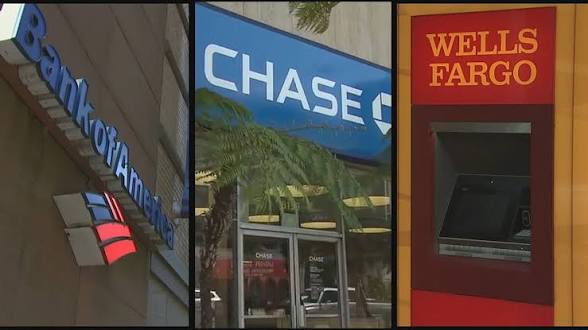


NEW YORK — A technical failure at JPMorgan Chase disrupted banking services across the United States on Monday, November 16, leaving thousands of customers reporting problems accessing accounts, transferring money and completing digital payments at several major financial institutions.
The disruption, which began with a software bug affecting JPMorgan Chase’s internal systems, triggered delays in transactions involving other banks, including Bank of America, Wells Fargo and U.S. Bank. Some customers also reported difficulties using Zelle, the popular digital payment service.
The incident raised concerns about the vulnerability of the country’s interconnected banking infrastructure, where technical problems at one major financial institution can affect transactions involving customers at other banks.
JPMorgan Chase, the nation’s largest bank by assets, confirmed that it was experiencing a temporary technical problem involving a software bug in its on-premises hardware systems.
Joe Evangelisti, a spokesperson for the bank, said the problem was not related to a cyberattack and was causing some customer transactions to take longer than usual.
Customers could still access their accounts and funds, the bank said, while technical teams worked to restore normal operations.
“This is not a systemic issue,” Evangelisti said, explaining that other financial institutions could experience delays only when processing transactions involving JPMorgan Chase.
Major banks and digital payments affected
Although the technical problem originated at JPMorgan Chase, customers of several other financial institutions reported disruptions throughout Monday.
Banks appearing in customer outage reports included:
– JPMorgan Chase
– Bank of America
– Wells Fargo
– U.S. Bank
– Truist
– Capital One
However, reports of service problems did not mean all these banks experienced failures in their internal systems.
U.S. Bank said its own systems were not directly affected but acknowledged that customers attempting to send or receive Zelle payments involving other financial institutions could experience delays.
Bank of America and Citigroup were not reporting problems with their own banking services, according to the Associated Press.
The distinction is important because transactions between banks depend on interconnected systems. A delay at one institution can affect customers elsewhere even when their own bank’s systems remain operational.
Zelle payments also experience delays
The disruption extended to Zelle, the digital payment network used by customers to transfer money between bank accounts.
Some customers reported difficulties sending and receiving payments, raising concerns for people relying on the service for everyday transactions.
Early Warning Services, the company that operates Zelle, said the payment network itself remained fully operational.
A company spokesperson explained that problems at individual financial institutions could delay payments for some customers.
Zelle is owned by a group of financial institutions that includes JPMorgan Chase, Bank of America, Capital One, PNC Bank, Truist, U.S. Bank and Wells Fargo.
Customers report widespread frustration
The scale of the disruption became increasingly visible through customer complaints on Downdetector, an online platform that tracks user-submitted reports of service interruptions.
By approximately 2 p.m. Eastern time Monday, nearly 4,800 users had reported problems involving Chase.
Customers described difficulties signing into online accounts, checking balances, completing transfers and accessing certain banking services.
Some Chase customers also encountered messages indicating that services were temporarily unavailable.
The disruption affected more than online banking. Reports from Philadelphia indicated that some Chase employees were also experiencing difficulties accessing customer accounts through internal systems.
For individuals and businesses attempting to complete payments, deposits and payroll transactions, the delays created additional uncertainty.
Not a banking collapse or confirmed cyberattack
Despite the nationwide reach of customer complaints, there was no evidence that the incident represented a collapse of the U.S. banking system.
JPMorgan Chase specifically described the problem as a temporary technical failure rather than a systemic banking issue.
There was also no indication from the bank that customer deposits had disappeared or that account funds had been lost.
The incident instead demonstrated how dependent modern banking has become on interconnected technology infrastructure and transaction-processing systems.
A failure involving a major financial institution can create disruptions beyond its own customers, particularly when payments involve multiple banks.
The distinction between a service outage and a financial crisis is significant. A banking-system crisis generally involves deeper problems, such as severe liquidity shortages, insolvency or widespread loss of confidence in financial institutions. None of those conditions was established by Monday’s technical incident.
Banking services begin returning to normal
By early Tuesday, November 17, outage-tracking data indicated that services at Chase and several other financial institutions, as well as Zelle, were returning to normal.
CBS News reported that the number of customer outage complaints had subsided, although the banks had been contacted for further comment.
The incident follows several other technology disruptions affecting major U.S. services in recent days, including a Microsoft outage that affected Outlook, Teams and Copilot, as well as an air traffic control disruption that grounded flights nationwide.
Together, the incidents have renewed questions about the reliability of technology systems supporting essential services.
For JPMorgan Chase and the wider banking industry, the immediate priority is restoring confidence in digital banking operations and ensuring that technical failures do not create unnecessary interruptions for customers.
While Monday’s disruption did not amount to a nationwide banking collapse, it offered a reminder of how quickly a technical problem at one major institution can ripple across the country’s financial network.
**Sources:** Associated Press, Reuters and CBS News reporting published November 16–17, 2026.
JPMorgan Chase Software Glitch Disrupts Banking Services Nationwide, Delays Transactions at Major U.S. Banks