


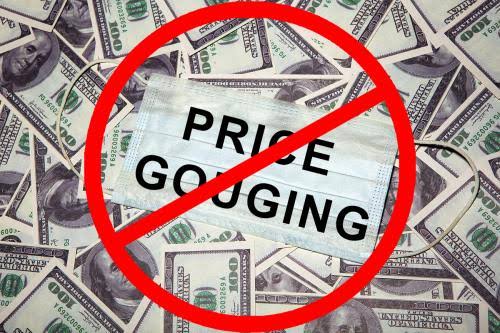
RICHMOND, Va. — Virginia Attorney General Jay Jones is enforcing state laws prohibiting businesses from charging unconscionable prices for essential goods and services following Gov. Abigail Spanberger’s November 27 declaration of a state of emergency in response to a severe coastal storm that brought flooding, damaging winds, roadway closures and property damage across parts of the Commonwealth.
The enforcement effort activates consumer protections under Virginia’s Post-Disaster Anti-Price Gouging Act, which is designed to prevent businesses from exploiting residents facing urgent needs during emergencies. The law covers essential supplies and services whose demand increases following a disaster, including food, drinking water, ice, generators, batteries, home repair materials, tree removal and motor fuels.
The announcement comes as Virginia begins assessing the storm’s damage and coordinating recovery efforts. For residents dealing with flooding, power disruptions and property damage, the possibility of inflated prices for necessities and emergency repairs adds another financial concern to an already difficult situation.
Spanberger declared the emergency through Executive Order 23 on November 27, after the coastal storm brought heavy rainfall, strong winds, coastal and tidal flooding and hazardous conditions. The declaration enables state agencies and local governments to coordinate recovery operations, access state resources and make financial assistance available as authorized.
The Virginia Emergency Support Team had been activated on November 25, ahead of the declaration, to coordinate the state’s response, support affected localities and facilitate damage assessments.
In announcing the emergency declaration, Spanberger emphasized the importance of restoring electricity, maintaining safe travel conditions and supporting affected communities. She also recognized first responders, utility crews, rescue teams and other emergency personnel who worked through the Thanksgiving holiday.
The Virginia Department of Emergency Management is coordinating with local governments to assess damage to homes, businesses, public infrastructure and utilities. The findings will help establish whether Virginia meets the requirements for federal disaster assistance. The governor’s office has clarified that federal assistance will be pursued if the Commonwealth qualifies.
What Virginia’s anti-price-gouging law prohibits
The Virginia Post-Disaster Anti-Price Gouging Act, established in 2004, prohibits suppliers from selling, leasing or offering necessary goods and services at unconscionable prices within an area covered by a declared state of emergency.
Under Virginia Code §59.1-527, the protections generally apply for 30 days following the emergency declaration.
The law is particularly important during disasters because consumers may have limited alternatives when purchasing necessities, arranging temporary accommodation or hiring contractors to address urgent property damage.
However, not every price increase during an emergency constitutes price gouging.
Virginia law establishes several considerations for determining whether a price is unconscionable. One central test is whether a supplier’s post-disaster price grossly exceeds what the same business charged for comparable goods or services during the 10 days immediately preceding the disaster.
Authorities can also compare the supplier’s prices with those charged by other businesses in the same trade area before the emergency.
The law recognizes that businesses may face legitimate increases in operating expenses during disasters. A price increase attributable solely to additional costs incurred in supplying goods or services, including higher costs imposed by suppliers, may be justified. Regular seasonal or holiday price adjustments are also considered.
This distinction allows businesses to respond to genuine supply and operating costs while preventing unjustified increases that take advantage of consumers.
Importantly, the law does not require an actual sale to have occurred before an excessive price offering can be considered unlawful.
How the Attorney General’s office enforces the law
The Office of the Attorney General is responsible for investigating suspected violations and enforcing Virginia’s consumer protection laws.
Violations of the Post-Disaster Anti-Price Gouging Act are enforceable through the Virginia Consumer Protection Act.
Consumers who believe they have encountered excessive emergency-related prices can submit complaints to the Attorney General’s Consumer Protection Section. Reports can include business information, product or service descriptions, advertised prices, receipts, estimates and other documentation that may assist an investigation.
Complaints involving gasoline and other motor fuels are handled separately by the Virginia Department of Agriculture and Consumer Services through its Office of Weights and Measures.
Residents can report suspected violations through the following channels:
– **Virginia Attorney General Consumer Protection Hotline:** 1-800-552-9963
– **Richmond and callers outside Virginia:** (804) 786-2042
– **Email:** consumer@oag.state.va.us
– **Online:** https://www.oag.state.va.us/consumer-protection/index.php/file-a-complaint?id=181&view=article
The broader implications for Virginia residents and businesses
The enforcement effort underscores the importance of consumer protection during disaster recovery, particularly for households already facing unexpected expenses associated with damaged property, disrupted utilities and emergency repairs.
For affected residents, the law provides an avenue to challenge potentially exploitative pricing when access to essential goods and services becomes increasingly important.
It also sends a clear message to businesses that emergency conditions do not remove their responsibility to comply with state consumer protection laws.
At the same time, the legislation recognizes the challenges businesses face when supply chains are disrupted, transportation becomes difficult and the cost of providing services increases. Its provisions therefore seek to distinguish legitimate business expenses from excessive pricing.
As Virginia continues its recovery from the Thanksgiving coastal storm, the Attorney General’s enforcement responsibilities will remain an important part of the state’s broader response. Consumer awareness, documented complaints and investigations will help determine whether businesses are complying with the law.
Ultimately, the protections are intended to ensure that residents can obtain essential goods and services without being subjected to unconscionable prices simply because an emergency has left them with fewer choices.
