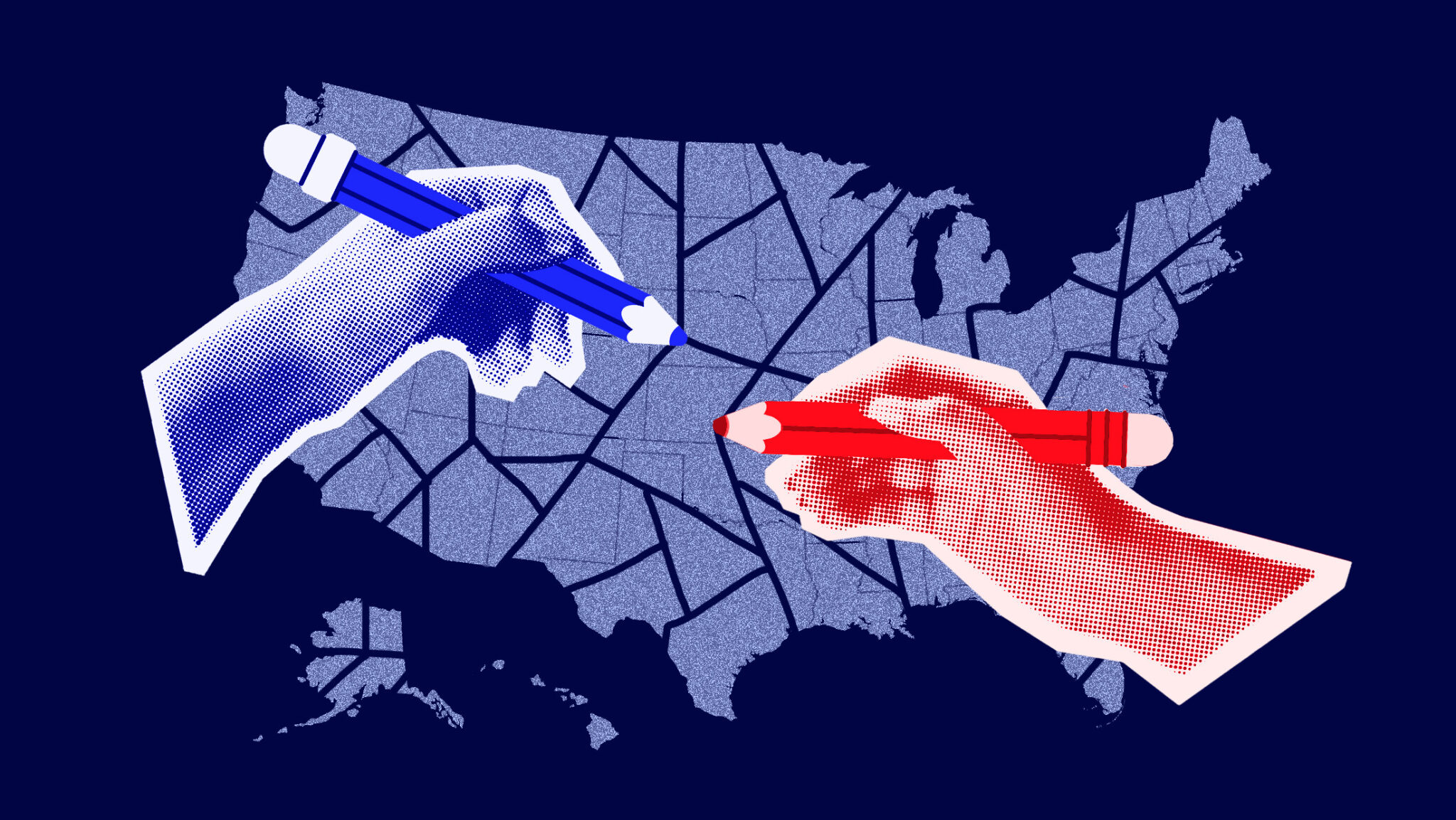


(Democracy Docket) – Mere hours after the U.S. Supreme Court garrotted the Voting Rights Act’s (VRA) safeguards against racial gerrymandering, Republicans across the nation — but particularly in the South — called on GOP legislatures to redraw congressional maps ahead of November’s midterm elections.Florida was already working on a newly gerrymandered map, which passed both chambers hours after the court’s decision in Louisiana v. Callais was announced Wednesday. But as the ink was still drying on the Supreme Court’s opinion, many Republicans rushed to catch up to the Sunshine State. Sen. Marsha Blackburn (R), who is running for Tennessee governor, posted a picture of an all-red congressional map of the state, writing “I urge our state legislature to reconvene to redistrict another Republican seat in Memphis. It’s essential to cement @realDonaldTrump’s agenda and the Golden Age of America.”Her primary opponent, Rep. John Rose (R-Tenn.), made a similar call on X, saying the one district held by Democrats there should be redrawn to the GOP’s advantage. “Memphis deserves Republican representation in Congress,” he wrote. “Today’s Supreme Court ruling paves the way for that.” “Now it’s time for the Alabama Legislature to act and redraw these districts the right way, fair, constitutional, and representative of our communities,” U.S. Rep. Barry Moore (R-Ala.) wrote on social media. That was echoed by Alabama Republican party officials. “We should have new districts as quickly as possible,” one told Al.com. In Georgia, state Sen. Greg Dolezal (R) also said he was calling for a special legislative session to redraw the maps. It may be too late for many of these states to act ahead of the 2026 midterm elections. Mail ballots for the primaries have already been sent out in every southern state aside from Tennessee and Florida, and lawmakers in those states would need time to draw, introduce, debate, vote upon, and enact new maps. Alabama redistricting before its May 19 primary would be a practical impossibility, given that it has already sent out mail ballots as required by the Uniformed and Overseas Citizens Absentee Voting Act (UOCAVA). Georgia’s primary is also May 19, while Louisiana’s is May 16, meaning both states have likewise sent out ballots ahead of UOCAVA’s 45-day pre-election deadline. Moreover, early in-person voting is already underway in Georgia, while it begins May 2 in Louisiana. So even though Louisiana could quickly revert to the map it adopted before it switched to the court-ordered one that was struck down in Callais, it’s likely still too late for this year’s contests. Still, asked whether the state should redraw its map before early voting begins Saturday, President Donald Trump told reporters Wednesday afternoon that “I would.” Given these deadlines, some Republicans want states with rapidly approaching primaries to quickly delay them so their legislatures can enact new maps before the midterms.Still, any last second change would create huge logistical hurdles for election administrators in those states and incur large, unbudgeted-for costs. On top of the practical challenges, whether these states can redraw their maps without unintentionally costing Republicans seats — a so-called “dummymander” — remains to be seen. Many of the congressional maps in these states already favor Republicans heavily. Tennessee currently has eight safe Republican seats and one Democratic seat in a state where Kamala Harris won over a third of the vote in 2024. Alabama has two majority-minority districts, with one created in 2023 — after the Supreme Court upheld the VRA and struck down a map with just one such seat.While returning to the 2021 map would likely net Republicans another district in Alabama, trying to eliminate both majority-minority districts could backfire. President Donald Trump’s approval rating is historically low and the party out of power — Democrats — usually performs well in midterm contests.A recent Strength In Numbers/Verasight poll found that just 35% of U.S. adults approve of Trump’s job performance, while 61% disapprove. And that disapproval runs deep: 55% of U.S. adults said the House should vote to impeach Trump, while just 37% said it shouldn’t. While it may be too late to tilt the scales ahead of the 2026 midterms, Republicans will have ample time to redraw maps before the 2028 elections. One analysis by Fair Fight Action and Black Voters Matter found that gutting the VRA could eventually help Republicans flip as many as 19 seats.But what’s good for the goose is good for the gander: Democrats could also redistrict in the states they control. Freed of the VRA’s constraints, Democratic gerrymanders in states like New York, New Jersey and Illinois could reduce or even completely neutralize the GOP’s gains in the South. That said, it would come at a high cost: The further erosion of minority representation in Congress.
Republicans rush to redraw electoral maps just hours after SCOTUS guts Voting Rights Act