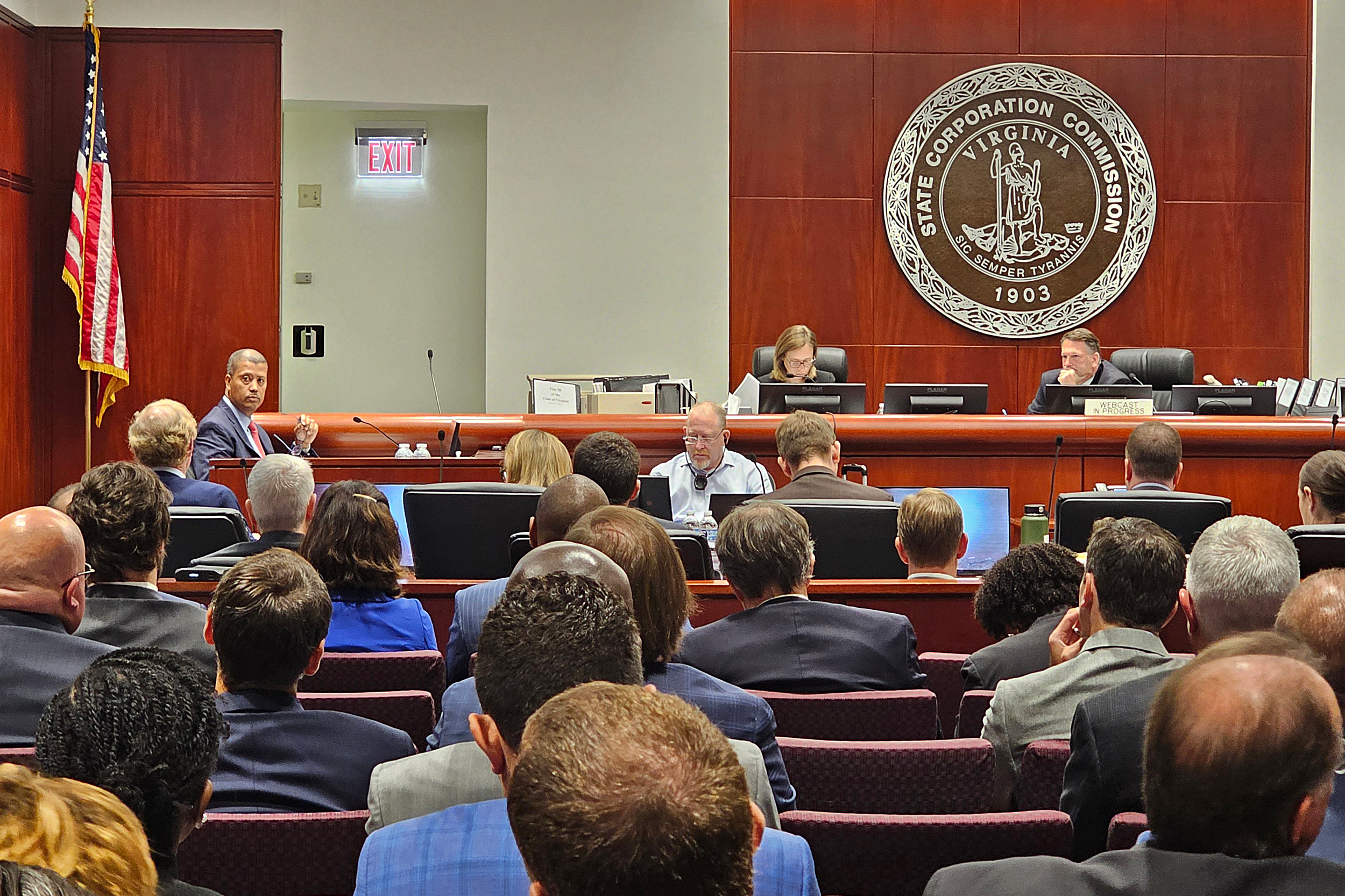


RICHMOND Va. — Virginia regulators are weighing growing concerns over electricity costs, corporate risk, data center expansion and clean-energy commitments as evidentiary hearings continue on Dominion Energy’s proposed $67 billion merger with NextEra Energy, with State Corporation Commission staff opposing the deal unless stronger protections are secured.
The merger would place Dominion under the ownership of Florida-based NextEra Energy, potentially creating the world’s largest regulated utility. The companies say combining their resources, purchasing power, and energy expertise could help manage rising electricity demand and deliver long-term benefits to customers.
But consumer advocates, local governments, clean-energy groups, and state officials have questioned whether those benefits are sufficiently documented or enforceable, warning that Virginia ratepayers could be exposed to financial risks associated with NextEra’s broader businesses.
SCC staff have concluded that the merger should not be approved without additional protective conditions, including safeguards involving corporate governance, financial separation, and protections against risks arising from NextEra’s nonregulated operations.
Ashley Macko, representing SCC staff, told the hearing that staff continued to believe the statutory standard had not been met without those safeguards.
The dispute centers on whether the merger would leave Virginia customers with reliable service and just and reasonable rates, as required under state law, and whether regulators can adequately protect customers from risks created by the combined company.
Rate increases and promised savings remain major concerns
Electricity affordability has emerged as one of the most prominent issues in the hearings.
Opponents argue that Dominion customers have already experienced substantial increases in their bills and that the merger could add pressure if costs associated with corporate expansion, infrastructure investment or NextEra’s other businesses are passed on to regulated customers.
The average Dominion residential monthly bill increased from $90.59 in July 2007 to $180.79 in July 2026, according to figures cited during the proceedings — nearly doubling over that period.
Dominion and NextEra have proposed $10 monthly bill credits for customers over four years, alongside other commitments intended to demonstrate benefits from the transaction. However, critics argue that temporary credits do not adequately address the potential for long-term rate increases.
Gov. Abigail Spanberger has called for stronger concessions, including a six-year freeze on residential base electricity rates and increasing monthly bill credits to $29 for families and small businesses. She has also sought guarantees that large electricity users, particularly data centers, pay a fair share of the costs associated with expanding the grid.
Five Virginia members of Congress have separately urged the SCC to reject the merger, arguing that the proposed protections do not sufficiently prevent residential customers from subsidizing infrastructure needed for large-scale industrial and data center growth.
Data centers, grid expansion, and clean-energy commitments
The rapid growth of data centers and their demand for electricity has added another layer to the merger debate.
Supporters of the deal argue that NextEra’s scale, investment capacity, and energy expertise could help Dominion meet Virginia’s growing power needs while supporting grid reliability and the transition to cleaner energy.
Opponents question whether those benefits are guaranteed and whether residential customers could bear costs associated with expanding transmission, generation, and other infrastructure to serve large electricity users.
Local governments and clean-energy advocates have also pressed for enforceable commitments to comply with the Virginia Clean Economy Act, which establishes the state’s clean-energy transition requirements.
They argue that any merger approval should include protections, ensuring the combined company does not weaken or delay Virginia’s statutory clean-energy goals.
NextEra executives have said that meeting the state’s clean-energy requirements remains a priority, while opponents have sought binding commitments rather than assurances.
Dispute over corporate safeguards and financial risks
Another major issue is NextEra’s broader corporate structure, which includes regulated utilities and competitive, nonregulated energy businesses.
SCC staff and consumer advocates have expressed concern that risks associated with those businesses could potentially affect Dominion’s regulated utility operations if sufficient financial and operational protections are not imposed.
Proposed safeguards include stronger separation of finances and resources, independent oversight of Dominion’s Virginia utility operations, protections against self-dealing, and measures designed to prevent financial problems elsewhere in the combined company from affecting Virginia customers.
The companies have agreed to several proposed conditions but have disputed or offered alternatives to some recommendations, including provisions involving independent governance, financial separation, and protections in certain circumstances.
Clean Virginia attorney Greg Habeeb argued that proposed customer credits and other concessions do not address the underlying risks of placing Dominion under NextEra’s control.
The companies, however, maintain that the merger can be structured to protect customers while delivering long-term benefits, and their attorneys have urged regulators to consider the proposed commitments as part of the overall transaction.
Political history and accountability questions
NextEra’s past political activity and controversies in Florida have also surfaced during the proceedings.
Some intervenors have argued that the company’s political history raises questions about corporate accountability, transparency, and whether similar practices could undermine Virginia’s regulatory safeguards.
The case has included debate over an internal document commonly referred to as the “Robo memo,” which relates to allegations surrounding NextEra’s political activity in Florida. Opponents have argued that the company’s past conduct should be considered when evaluating its proposed acquisition of Dominion.
NextEra has faced scrutiny over those allegations, including a $150 million settlement related to claims involving political interference schemes in Florida.
The merger’s supporters argue that the transaction should be judged primarily on its effects on utility service, rates, financial stability, and enforceable protections under Virginia law, rather than unrelated political disputes.
Supporters point to jobs, investment, and energy reliability
The merger has also received support from business interests and labor representatives, who argue that combining the companies could strengthen investment capacity, support energy infrastructure development, and create economic opportunities.
Supporters say Virginia will need significant additional energy resources to accommodate population growth, industrial development, and data centers, and that a larger utility organization could be better positioned to finance and deliver those investments.
Labor representatives have also defended the role of data centers in supporting electrical construction and skilled employment, cautioning against dismissing an industry that contributes to jobs and infrastructure demand.
The companies have maintained that economies of scale and greater purchasing power could help lower infrastructure costs and improve service, although opponents say those savings have not been adequately quantified or guaranteed for Virginia customers.
SCC decision expected by January
The evidentiary hearings, which began Nov. 17 in Richmond, have brought together more than 30 participating parties, including state agencies, local governments, consumer advocates, environmental organizations, business interests, and the utilities.
The commission is expected to issue a decision by Jan. 11, 2027. It could reject the merger, approve it as proposed, or require additional conditions that the companies must accept.
The hearings have made clear that the debate is not simply about combining two energy companies. It is about who bears the cost of Virginia’s growing electricity demand, how customers are protected from corporate risks, whether promised savings are enforceable, and how the state maintains its clean-energy commitments.
For Dominion and NextEra, the merger represents an opportunity to expand resources and respond to Virginia’s changing energy needs. For opponents, the burden remains on the companies to demonstrate that the transaction will not jeopardize affordable rates, reliable service, or public protections.
The final decision will determine whether the proposed merger moves forward and what safeguards, if any, Virginia regulators require before Dominion changes ownership.
Dominion-NextEra Merger Faces SCC Opposition Over Virginia Electricity Bills, Data Centers and Ratepayer Protections