

WASHINGTON DC— Four Democratic senators from Virginia and Maryland are pressing for sustained federal investment in the Washington Metropolitan Area Transit Authority (WMATA), warning that funding reductions could threaten efforts to modernize Metro, maintain aging infrastructure and improve service across the National Capital Region.
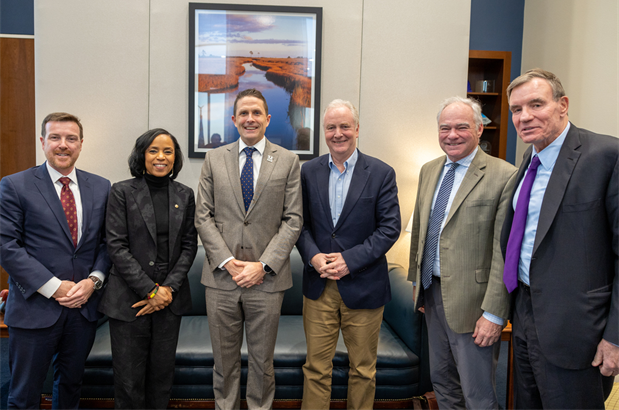
U.S. Sens. Mark Warner and Tim Kaine of Virginia and Chris Van Hollen and Angela Alsobrooks of Maryland met with WMATA General Manager and CEO Randy Clarke to discuss the transit system’s future, infrastructure needs and priorities ahead of the next federal surface transportation reauthorization bill.
The legislation that Congress is preparing to consider will establish federal transportation funding levels and priorities, making it a critical opportunity for transit agencies such as Metro to secure long-term financial support.
The senators said Metro remains essential to the region’s economy, connecting residents and visitors to employment, schools, businesses, and public services. They pointed to improvements in safety and reliability but said continued federal investment would be necessary to sustain that progress.
“Metro is the backbone of our region’s transportation network,” the senators said in a joint statement, emphasizing the importance of a safe, reliable, and affordable transit system.
Aging infrastructure remains a major challenge
A central issue during the meeting was maintaining federal transit funding at levels established under the Bipartisan Infrastructure Law.
The senators and WMATA leadership discussed the need for continued support for maintenance and state-of-good-repair projects, which address aging equipment, infrastructure deterioration, and other issues affecting system reliability.
Metro has made progress in reducing its maintenance backlog. Since 2016, the estimated value of outstanding state-of-good-repair projects has fallen from approximately $7 billion to $4 billion.
However, the remaining $4 billion backlog illustrates the scale of work still required to keep the system operating safely and efficiently.
The senators warned that reductions in federal assistance could undermine the progress already made and make it harder for Metro to address outstanding infrastructure needs.
For commuters, these investments have practical consequences. Delayed maintenance and aging equipment can contribute to service disruptions, longer travel times, and reliability concerns across a system used daily by workers, students, and businesses.
Regional bus rapid transit projects also discussed
The meeting extended beyond Metro’s rail network to include major transit improvements supported through the federal Capital Investment Grants program.
Among the projects discussed were the Richmond Highway Bus Rapid Transit (BRT) project in Fairfax County, Virginia, and the Veirs Mill Road BRT project in Montgomery County, Maryland.
The federal program helps fund major public transportation investments, including new transit infrastructure and improvements designed to expand capacity and service.
Both projects are important regional transportation priorities because they aim to improve transit connections and provide additional travel options in heavily traveled corridors.
Continued federal support will be an important consideration as these and other regional projects move through planning and development.
Metro’s proposed Red Line modernization
Another major topic was Metro’s proposed Red Line Modernization Project, which would replace or upgrade aging signaling technology and improve operations across the system.
Modern signaling is important to train operations because it helps manage train movements, system capacity, and service reliability.
The proposed modernization reflects Metro’s broader challenge of updating infrastructure while continuing to operate a complex transit network serving communities across the District of Columbia, Maryland, and Virginia.
The project also underscores why regional leaders are looking beyond immediate maintenance needs toward longer-term investments that could improve service and accommodate future transportation demand.
Federal funding debate comes at a critical time
The senators’ meeting comes as Congress prepares to negotiate the next surface transportation authorization, legislation that will shape federal transportation policy and investment for years to come.
The Bipartisan Infrastructure Law established significant federal support for transportation infrastructure, including public transit. Maintaining those funding levels is a priority for the four senators as lawmakers consider what comes next.
For Metro, the stakes extend beyond individual construction projects. Federal funding helps support major repairs, infrastructure upgrades, and modernization efforts that local and regional resources may struggle to cover alone.
The senators said they intend to protect federal investments and ensure Metro has the resources needed to serve the region over the long term.
However, the meeting did not announce new funding commitments, approve additional projects, or establish a final agreement on future federal spending. Those decisions will depend on congressional negotiations and the eventual transportation legislation.
What it means for commuters and the region
Metro’s financial and infrastructure needs affect more than the transit agency itself. The system plays a major role in the movement of workers, students, tourists, and customers throughout the Washington metropolitan area.
Reliable public transportation also supports regional businesses by connecting employers with workers and reducing dependence on congested roads.
The senators’ message to Congress is that maintaining Metro’s progress will require sustained federal participation, particularly as the agency works through billions of dollars in outstanding maintenance needs.
For riders, the outcome of the upcoming transportation funding debate could influence how quickly aging infrastructure is replaced, how reliably trains operate, and whether major regional transit improvements move forward.
For now, the meeting signals continued support from Virginia and Maryland’s Democratic senators for federal investment in Metro. Whether that support translates into funding at the levels sought by the region will become clearer as Congress develops the next transportation bill.
Virginia, Maryland Senators Urge Continued Federal Investment in Metro as Congress Prepares Transportation Funding Bill