

By: Maria-Paula
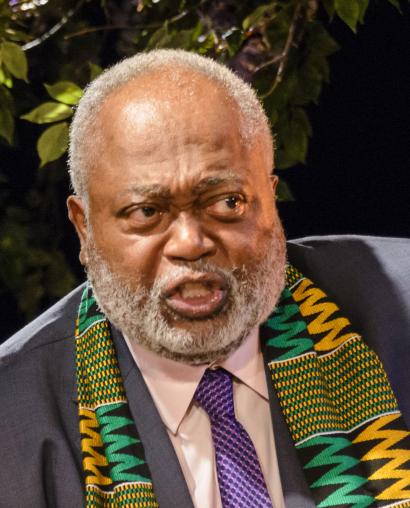
As the nation observes Black History Month, the life and legacy of the late William T. Newman Jr., a pioneering jurist, public servant, and cultural leader whose work reshaped civic life in Arlington, Virginia, and helped expand opportunities for generations to come, is also honoured.
From the segregated streets of Arlington’s Nauck community, Green Valley, to the bench of the 17th Judicial Circuit Court, as a child growing up during segregation, he witnessed first-hand the inequities of the era, a journey that would fuel his lifelong commitment to justice, public service and inclusion. Newman’s life journey reflected both the challenges and the progress of modern American history.
In 1987, Newman made history by breaking barriers in public office when he became the first African American elected to the Arlington County Board. Four years later, he was selected as Board Chair, further cementing his role as a respected civic leader. His tenure helped guide Arlington through a period of growth while ensuring that community voices, particularly those historically marginalized, were heard in local government.
Newman’s leadership extended beyond county lines. He later served as president of the regional Council of Governments, strengthening collaboration among Northern Virginia jurisdictions and promoting regional cooperation.
In developing a distinguished judicial career, Newman was appointed to the 17th Judicial Circuit Court of Virginia in 1993, which serves Arlington County and the City of Falls Church. Over three decades on the bench, he built a reputation for fairness, preparation, and integrity. He equally served as the chief judge, a role he held until stepping down from leadership while continuing to serve on the court until his retirement in 2023.
Earlier in his career, Newman founded the Northern Virginia Black Attorneys Association, which created mentorship pathways and professional support for African American lawyers in the region. His commitment to expanding representation in the legal profession remains one of his lasting institutional legacies.
Throughout his judicial career, colleagues praised his calm demeanor, intellectual rigor, and unwavering respect for the rule of law. He was repeatedly recognized for professional excellence and community service, which earned him honors that reflected both legal distinction and civic impact.
As a champion of community philanthropy, Newman was also a founding force behind the Arlington Community Foundation, an organization dedicated to advancing charitable giving and strengthening local neighborhoods. The foundation continues to recognize community leaders through awards named in Newman’s honor, reflecting the spirit of service he embodied.
In recognition of his extraordinary contributions, Arlington County proclaimed June 29 as The Honorable William T. Newman Jr. Day is a tribute to a lifetime of dedication to justice and civic progress.
A graduate of Ohio University and later the Catholic University of America’s Columbus School of Law, Newman began as a trained actor before fully entering the legal profession where balanced his distinguished legal career with a deep love in Arts specifically theater. Despite serving as a judge, he continued to perform in stage productions and maintained membership in Actors’ Equity and SAG-AFTRA. His performances, including works by August Wilson, reflected the same depth, discipline, and presence that marked his judicial service.
William T. Newman Jr. passed away in February 2026, leaving behind a legacy that endures, defined by courage, intellect, and compassion. He shattered barriers in government, strengthened institutions through leadership, uplifted fellow professionals through mentorship, and celebrated culture through the arts.
This Black History Month, his story stands as a testament to the power of perseverance and principled leadership. In courtrooms, council chambers, and community stages, Judge Newman demonstrated that justice is not only a legal ideal but a lived commitment to fairness, dignity, and opportunity for all without discrimination.
Hide quoted text
Black History Month Spotlight: The Honorable Judge William T. Newman Jr.