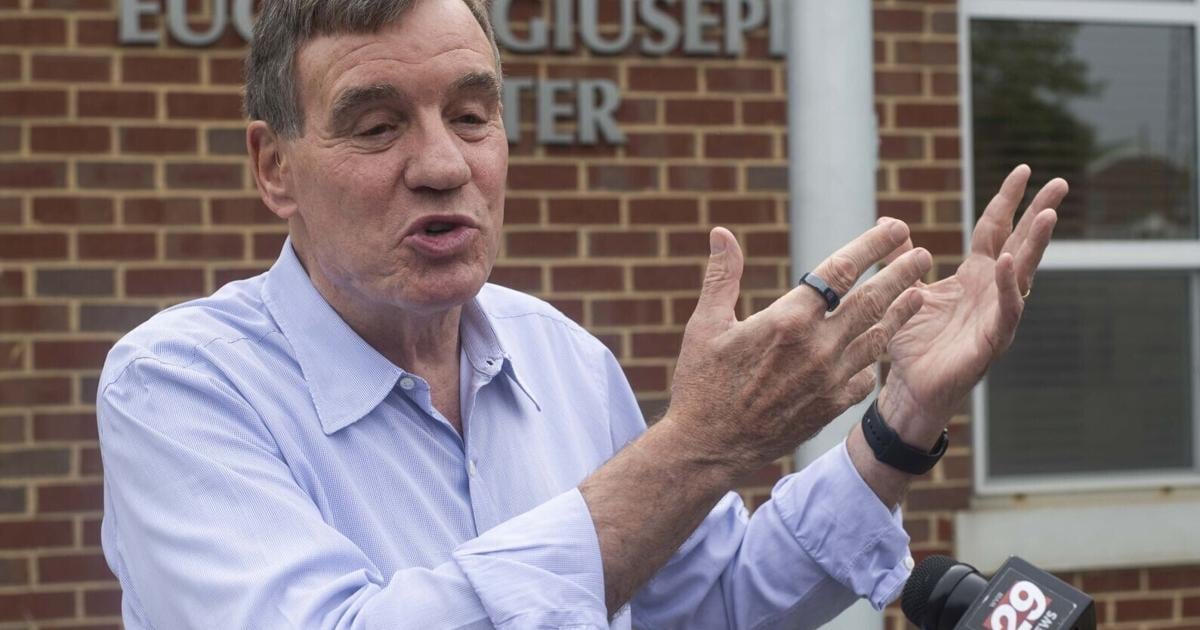


Sen. Mark Warner has filed a bill that does away with the healthcare cuts in President Donald Trump’s “One Big Beautiful Bill” while creating a low-cost public health plan to start the nation on the path to universal healthcare.
The 240-page bill would also reestablish and make permanent the enhanced federal credits that the One Big Bill allowed to lapse. Those credits reined in the cost of Affordable Care Act coverage to no more than 8.5% of household income, which covered all premiums for the lowest-income families.
Warner’s bill expands Medicare’s bargaining muscle when negotiating drug prices and tightens oversight over the pharmacy benefit management firms that handle insurers’ prescription benefits, which critics say make profits by charging patients too much and paying pharmacists too little.
“Our current healthcare system makes it hard and expensive for Virginians and Americans across the country to access the care they rely on,” Warner said.
“There is still a lot of work to be done to get to universal coverage, but my comprehensive Health CARE Act includes lifesaving provisions to meaningfully improve healthcare and lower costs, including for those on Medicare, Medicaid, and those who get health insurance through their employer right now,” Warner said.
Warner’s bill also would:
Require that the price discounts on medication that Medicare negotiates would apply to Affordable Care Act and employer-provided health plans. This includes the $35 cap on insulin.
Cap out-of-pocket costs for medication under group or individual plans to $2,000 for single people and $4,000 for families in 2028, to be adjusted in line with premium increases going forward.
Add hearing aid coverage to Medicare, the federal health coverage for older Americans.
Allow Medicare Advantage enrollees to switch plans mid-year if their provider leaves their network.
Reinstate the higher federal match for Medicaid expansion coverage. Medicaid is the coverage for low-income households and people with disabilities that’s jointly funded by the federal and state governments. The higher federal match funded Medicaid’s expansion to low-income adults.
Require hospitals, clinical laboratories, imaging centers, and ambulatory surgical centers to make their prices public so patients can make more informed decisions about where to go for care.
Order Affordable Care Act and employer-provided health insurance plans to disclose more detailed information about benefits, out-of-pocket costs and how they decide to pay or reject claims.
Retain the One Big Bill’s $50 billion, five-year Rural Health Transformation Program, which aims to support healthcare services in rural areas.
The low-cost public health plan Warner proposes would be available for people eligible for the Affordable Care Act — that is, people who aren’t able to get Medicare, Medicaid or employer health insurance.
It would be designed to cost less than comparable coverage that’s now available through Obamacare.
The bill says doctors, clinics and hospitals that now care for people on Medicare and Medicaid would have to accept people enrolled in the public plan.
The public plan would not draw on Medicare trust funds or affect benefits for people enrolled in Medicare.
On Medicaid, in addition to reinstating the higher federal match for Medicaid expansion coverage — a move that would benefit Virginia as a late starter in the expansion — Warner proposed linking the federal match to state unemployment rates so that the match increases if joblessness rises.
Medicare’s power to negotiate prices on 20 drugs a year from 2029 on would rise to cover 30 drugs in 2030, 40 drugs in 2031, and 50 drugs in 2032 and years after that.
Warner’s bill “represents a meaningful step toward expanding access to coverage, lowering healthcare costs, strengthening Medicaid, and reducing barriers that too often prevent patients from receiving the care they need,” said Tracy Douglas, chief executive officer of the Virginia Community Healthcare Association.
“When someone goes without medical care due to red-tape barriers, the consequences to their health can be life-threatening as well as financially devastating,” said Emily Hardy, director of advocacy at the Virginia Poverty Law Center’s Center for Healthy Communities.
“This bill would not only reverse the 2025 harmful cuts to life-saving care but also create a federal option on the marketplace, which can assure that quality and affordable care is available to all Virginians,” she said.
Warner calls for low-cost public health coverage